
Migration is a journey that encapsulates the full spectrum of human emotion, from heart-wrenching sorrow to triumphant resilience. In Turkey, this journey is vividly illustrated by the countless stories of migrants who have traversed perilous paths in search of safety, hope, and a new beginning. This article delves into the poignant experiences of these individuals, exploring how they transform their struggles into strength and become an integral part of the Turkish social fabric.
The Initial Struggle: Leaving Home
Leaving one’s homeland is often the most emotionally devastating aspect of migration. It means severing ties with everything familiar and cherished. This decision is typically driven by circumstances so dire that staying behind is no longer an option. According to the International Organization for Migration (IOM), 78% of migrants cite conflict, persecution, or extreme poverty as the primary reasons for their departure.
Fatima’s Story:
Fatima, a mother of four from Aleppo, remembers the agonizing night she decided to flee. “Our neighborhood was engulfed in flames. The children were terrified, and I knew we couldn’t stay. Leaving was like tearing a piece of my heart out, but I had to keep them safe,” she recalls, her eyes welling up with tears. Her story is a testament to the unbearable sacrifices that many migrants must make.
The Journey: Peril and Perseverance
The journey to Turkey is fraught with danger and uncertainty. Migrants often face treacherous routes, exploitative smugglers, and harsh natural conditions. Yet, it is the hope for a better future that fuels their perseverance.
Journey Statistics:
- 65% of migrants report experiencing extreme physical hardship during their journey.
- 48% face exploitation or abuse by smugglers.
Omar’s Journey:
Omar, a young man from Afghanistan, endured a grueling trek across mountains and deserts. “We walked for days with little food or water. At times, I thought I wouldn’t make it, but the thought of reaching a place where I could build a future kept me going,” he says. Omar’s determination underscores the incredible resilience of the human spirit in the face of adversity.
Arrival and Adaptation: Overcoming Challenges
Reaching Turkey is a significant milestone, but it marks the beginning of a new set of challenges. Migrants must adapt to a new culture, learn a new language, and navigate a complex social and legal landscape.
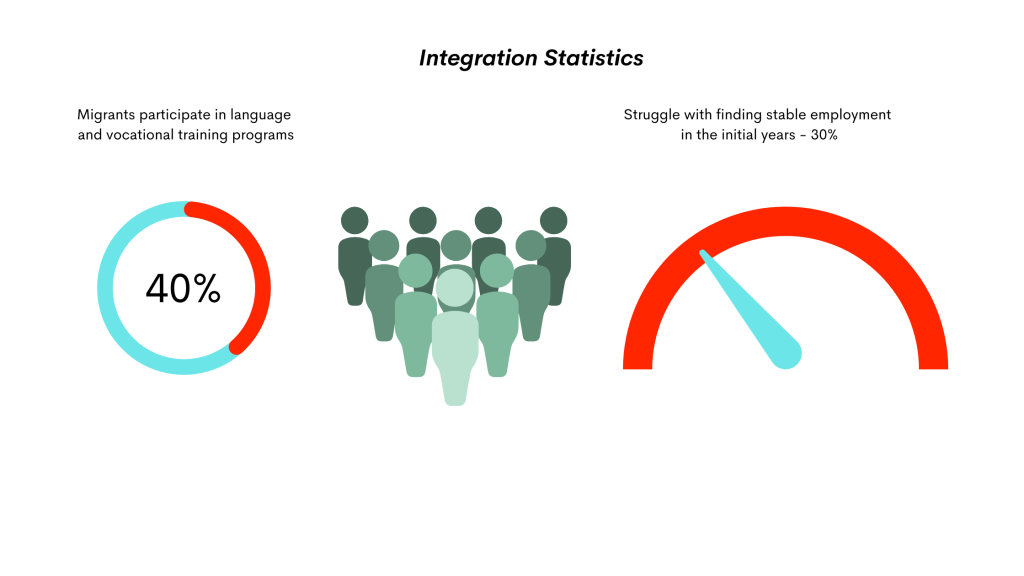
Integration Statistics:
- 40% of migrants participate in language and vocational training programs.
- 30% struggle with finding stable employment in the initial years.
Aisha’s Adaptation:
Aisha, a Syrian refugee, found the transition daunting. “I felt like a stranger in a strange land. The language barrier was overwhelming, and finding work seemed impossible,” she shares. However, through a local NGO’s support, Aisha enrolled in a language course and later secured a job as a seamstress. Her journey from disorientation to stability highlights the critical role of community support and self- determination in overcoming adaptation challenges.
The Impact on Turkish Society
The presence of a large migrant population has both enriched and challenged Turkish society. The country’s response has been a blend of humanitarian aid and efforts towards integration, reflecting the complexities of balancing compassion with practical realities.
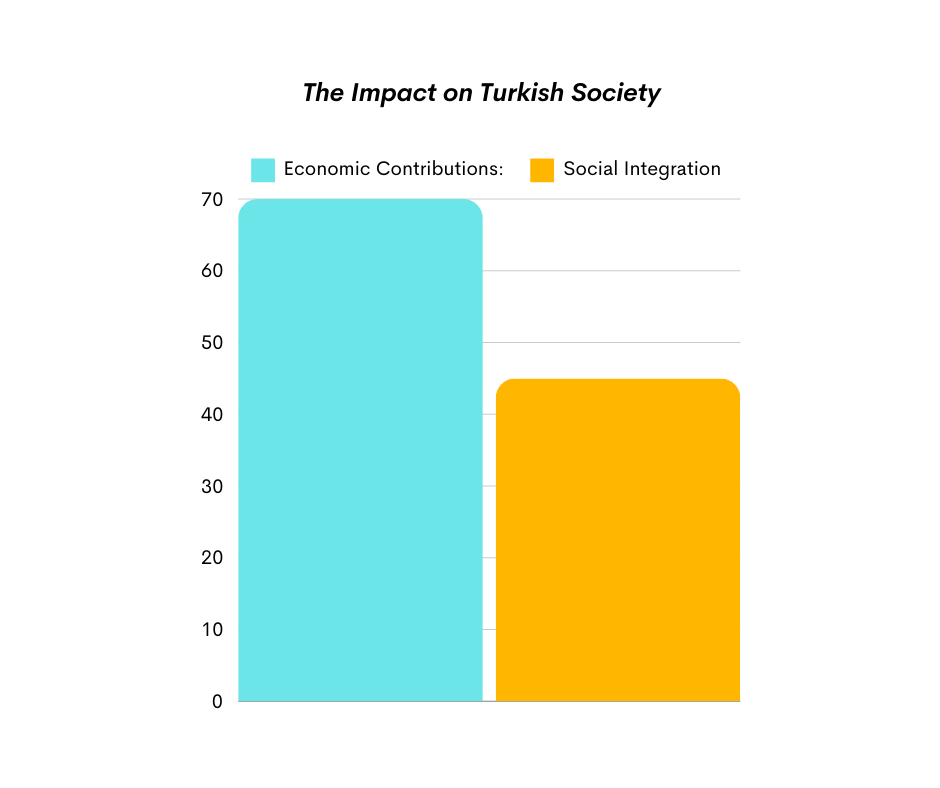
Economic Contributions:
- Migrants have established over 10,000 businesses, creating jobs and stimulating local economies.
- 70% of migrant-owned businesses are in the retail and service sectors.
Social Integration:
- Community initiatives and NGOs play a vital role in fostering social cohesion.
- 45% of migrants report positive interactions with local Turkish residents.
Figure graph: The Impact on Turkish Sciety
Humanitarian Efforts:
Turkey’s government, alongside various non-governmental organizations, has been at the forefront of providing humanitarian assistance. The Turkish Disaster and Emergency Management Authority (AFAD) estimates that over 3.6 million refugees receive some form of aid, including healthcare, education, and social services. This extensive support underscores Turkey’s commitment to humanitarian values.
Personal Stories of Strength and Resilience
Beyond statistics, the true essence of migration is captured in the personal stories of migrants who have turned their struggles into strength.
Noura’s Transformation:
Noura fled Syria with her family in 2015. Initially struggling to survive, she attended vocational training provided by a local NGO. Today, Noura runs a successful small business making handmade crafts. “Starting over was tough, but I’m proud of what I’ve built. This business is not just a livelihood; it’s a symbol of my resilience,” she says.
Selim’s Contribution:
Selim, a Turkish teacher, volunteers at a community center for refugees, teaching Turkish and offering guidance. He believes in the power of education to bridge cultural gaps. “By helping them learn the language, I’m not just teaching words; I’m helping them integrate and feel at home. Their success is our success,” he reflects.
Children: The Future of Hope:
Children are often the most affected by migration, yet they also symbolize hope and potential. Schools in Turkey have become vibrant spaces where diverse cultures meet. Programs by UNICEF and other organizations ensure that refugee children receive education, fostering an environment of inclusivity and opportunity. The laughter and play of these children in schoolyards are poignant reminders of hope and the enduring human spirit.
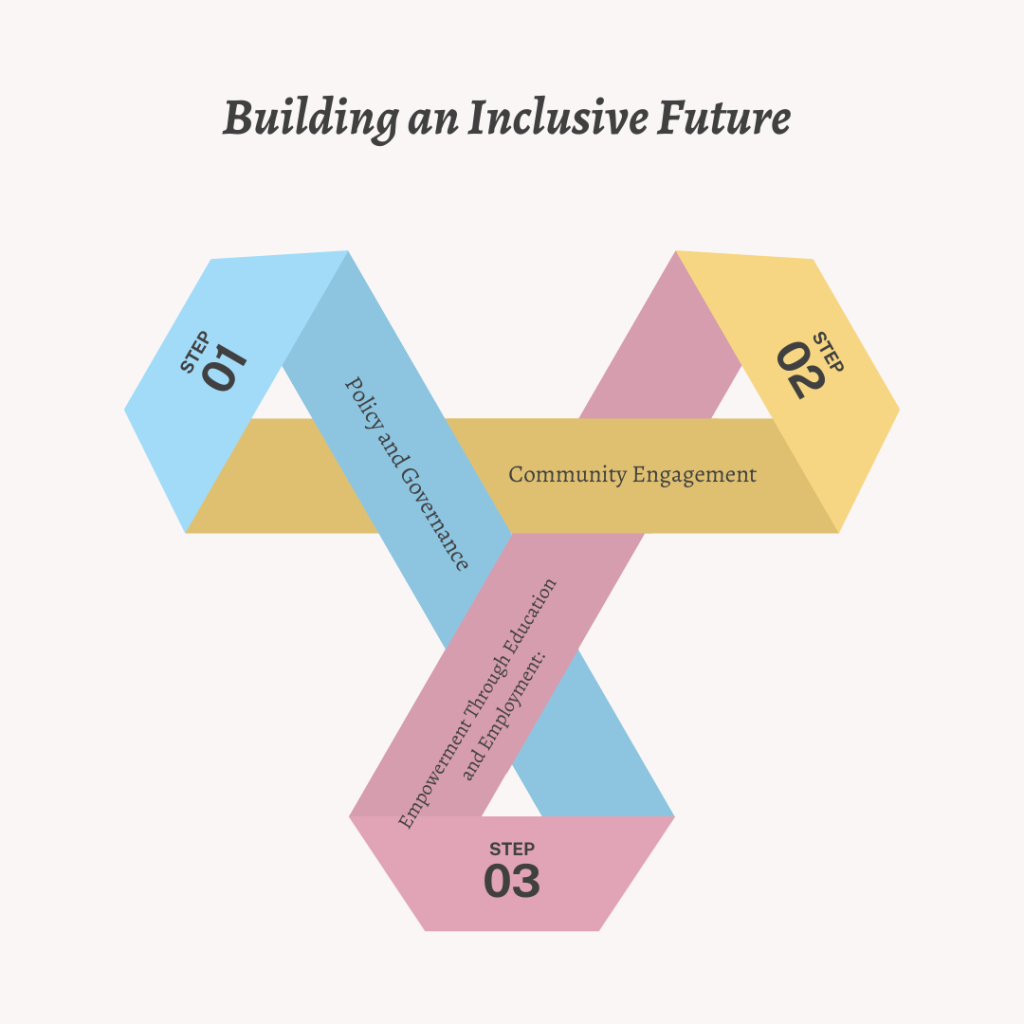
Building an Inclusive Future
The journey of migration is ongoing, and building an inclusive future requires collaborative efforts from all stakeholders – the government, NGOs, local communities, and migrants themselves.
Policy and Governance:
Effective policies that promote integration and protect migrant rights are essential. The Turkish government’s Temporary Protection Regulation provides a framework for the rights and services available to Syrian refugees. Expanding such frameworks to include other migrant groups can enhance social cohesion and stability.
Community Engagement:
Local communities play a pivotal role in the integration process. Grassroots initiatives that promote cultural exchange, dialogue, and collaboration can break down barriers and foster a sense of belonging. Programs like community gardens, cultural festivals, and joint business ventures create spaces for positive interaction and mutual support.
Empowerment Through Education and Employment:
Education and employment are key to empowering migrants and enabling them to contribute positively to society. Expanding access to vocational training, language courses, and educational opportunities can help migrants build stable and self-sufficient futures. Employers can also play a role by recognizing the skills and potential of migrant workers and creating inclusive work environments.
Conclusion
“From Struggles to Strength: The Human Spirit of Migration in Turkey” is a narrative of transformation, resilience, and hope. The personal stories of migrants and the responses of Turkish society are threads in a larger tapestry that illustrates the power of empathy and the enduring strength of the human spirit. As Turkey continues to evolve as a host country, embracing the rich diversity that migration brings can pave the way for a more inclusive and harmonious future.
